Data Room
Search across this room’s published 1 document and FAQ answers.
Governing Documents
Frequently Asked Questions
Building Governance & Rules
How is the building governed?
The Condominium is governed by the International Building Condominium Association, Inc., a Missouri not-for-profit corporation. Day-to-day governance is carried out by an elected Board of Directors ("the Board"), which has authority to administer the Condominium, adopt and enforce Rules and Regulations, prepare and adopt annual budgets, set assessments, and manage the Common Elements. (§§ 1.3, 7.1)
The Board has final authority to determine violations of the Declaration's restrictions and to issue fines, levy special assessments, suspend certain common element privileges (but not the right to access a unit), and take legal action to enforce compliance. (§§ 5.1, 11.1–11.5)
Each Unit Owner holds a vote in Association matters proportional to their percentage share of the Common Elements. (§ 1.24)
The budget is adopted annually. A summary is provided to all Unit Owners within 15 days of adoption, and unless a majority of all Unit Owners vote to reject the proposed budget at the annual meeting, it is ratified. (§ 7.1(b)(2))
Is the building professionally managed?
The Declaration contemplates and authorizes professional management. The budget expressly covers compensation paid to property managers and managing agents. The Board is authorized to engage a managing agent and may delegate management responsibilities accordingly. Notices to the Board may be delivered to the Association's registered agent or managing agent. (§§ 1.8(b), 7.1(b)(1), 14.4(a))
Can the Declaration and Rules be changed?
The Declaration may be amended by a vote of Unit Owners holding at least 67% of the votes in the Association (by percentage of ownership). Any amendment must be recorded with the Recorder of Deeds of the City of St. Louis. (Article 12)
Rules and Regulations (supplementary operating rules not part of the Declaration) may be promulgated and amended by the Board itself from time to time. (§ 1.23)
No amendment may eliminate the requirement that there be a Board of Directors.
HOA Fees & Financial Responsibilities
What do HOA assessments cover?
The Board prepares the Association's annual budget and sets assessments accordingly. Assessments cover Common Expenses, which include:
- Maintenance, management, operation, repair, and replacement of the Common Elements (lobbies, hallways, elevators, exterior walls, roofs, foundations, common utilities, Sky Bridge, etc.)
- Management and administration of the Condominium, including compensation for property managers, accountants, attorneys, and other employees
- Insurance premiums for the building
- Sewer charges, electricity, gas, and other utility or service costs for Common Elements
- Trash and refuse collection fees
- All other amounts required to fulfill the Association's duties under the Declaration (§§ 1.8, 7.1(b))
Assessments are allocated to each unit based on its percentage share of ownership in the Common Elements, which is calculated in proportion to the unit's square footage relative to all units. (§§ 1.24, 7.1(a))
The Board may also levy Special Assessments to cover costs or extraordinary expenditures that exceed budgeted reserves. (§ 7.2(c))
Parking Units pay only one-fourth (1/4th) of the assessments paid by other units. (§ 5.5(e))
How are assessments billed?
Beginning January 1 of each year, each Unit Owner is obligated to pay one-twelfth (1/12th) of their annual assessment on the first day of each month. The Board provides each Unit Owner with an itemized statement of assessments due on or before December 31 of the prior year. (§§ 7.1(c)–(d))
What happens if assessments are not paid?
Assessments not paid by the 20th of the month accrue a late charge of $25.00. Unpaid assessments automatically constitute a lien on the unit. If default continues for 30 days, the Board may bring legal action to foreclose the lien. Court costs and reasonable attorney's fees may be assessed against the delinquent owner. (§ 7.3(a))
Using Your Loft
Can I run a business from my loft?
It depends on your unit classification.
Residential/Light Business Units may be used primarily as a single-family residence and also for ancillary light business purposes — but for no other purposes. Permitted light business uses include trades, occupations, or professions conducted or maintained by the Unit Owner or occupants. However, the following are not permitted:
- Retail operations
- Restaurant operations
- Heavy manufacturing
Customers, clients, suppliers, employees, or delivery personnel may not regularly call on or work in the unit after 1:30 p.m. or before 7:00 a.m. (subject to Board-adopted regulations), though persons residing in the unit or other employees who occasionally need to work late quietly are not in violation unless their activity constitutes a nuisance. (§ 5.2(d))
The unit must also be occupied as an actual residence at all times and must comply with St. Louis ordinances for residential dwellings, including having full bathroom, shower/tub, and kitchen facilities. (§ 5.2(a))
No Residential/Light Business Unit may be divided or have a portion subleased to another person.
Maintenance & Insurance
Who fixes what?
The Association is responsible for:
- Maintenance, repair, and replacement of the Common Elements, including the building shell, foundations, exterior walls, exterior windows, roofs, roof systems, structural floor joists, utility corridors and shafts serving more than one unit, common entrances, hallways, lobbies, and elevators (§§ 1.7, 1.8(a))
- Painting and maintenance of all exterior surfaces, including exterior windows, exterior sashes, frames, and entry doors of units, if needed (§ 5.1(j))
Unit Owners are responsible for:
- Keeping their unit in good order, repair, and clean condition, including all Limited Common Elements designated for their use
- Cleaning, washing, decorating, repairing, or replacing all surface materials — including interior brick walls, drywall, concrete flooring, ceiling surfaces (to the boundary of the unit), and any other materials forming the surface of the unit boundary (§ 5.1(j))
- All doors, door frames, locks, hinges, and hardware serving only their unit
- All window coverings and draperies installed by the owner (subject to Board regulations on exterior appearance)
- Heating and cooling equipment and controls that exclusively service one unit, even if part of a larger common system (§§ 2.2, 2.3)
- Hinges, lock sets, closers on doors and windows, window frames, panes, glass, including screens and operating mechanisms serving only a single unit (§ 5.1(j))
- Repairing and replacing the portions of heating/cooling and plumbing systems that exclusively service their unit (§ 7.7)
If damage to Common Elements or another unit is caused by a Unit Owner's intentional or negligent act (or that of their family member, pet, guest, tenant, or occupant), the responsible Unit Owner bears the cost of repair. (§ 8.6)
Do I need my own insurance?
Yes. While the Association maintains a master fire and extended coverage insurance policy covering the building and Common Elements — and may in its discretion also insure certain original improvements within units (such as original floor coverings, wall and ceiling coverings, original appliances, light fixtures, and built-in mechanical systems) — Unit Owners are individually responsible for insuring:
- Personal property and furnishings
- Any additions or improvements made to the unit by the owner after the initial purchase
- Any items the Board has elected not to cover under the Association's policy
- Personal property located anywhere on the property (§ 8.4)
The Association's master policy does not cover theft or damage to a Unit Owner's personal property by the Association's employees, unless caused by Association employees. Unit Owners should obtain their own HO-6 (condo owner's) policy.
The Association's policy deductible is shared among the units affected by a loss. Unit Owners are responsible for their proportionate share of the deductible. (§ 6.9)
Living at The City Museum Lofts
Is it noisy? Don't you hear everything?
Not at all—at least not in the way most people imagine.
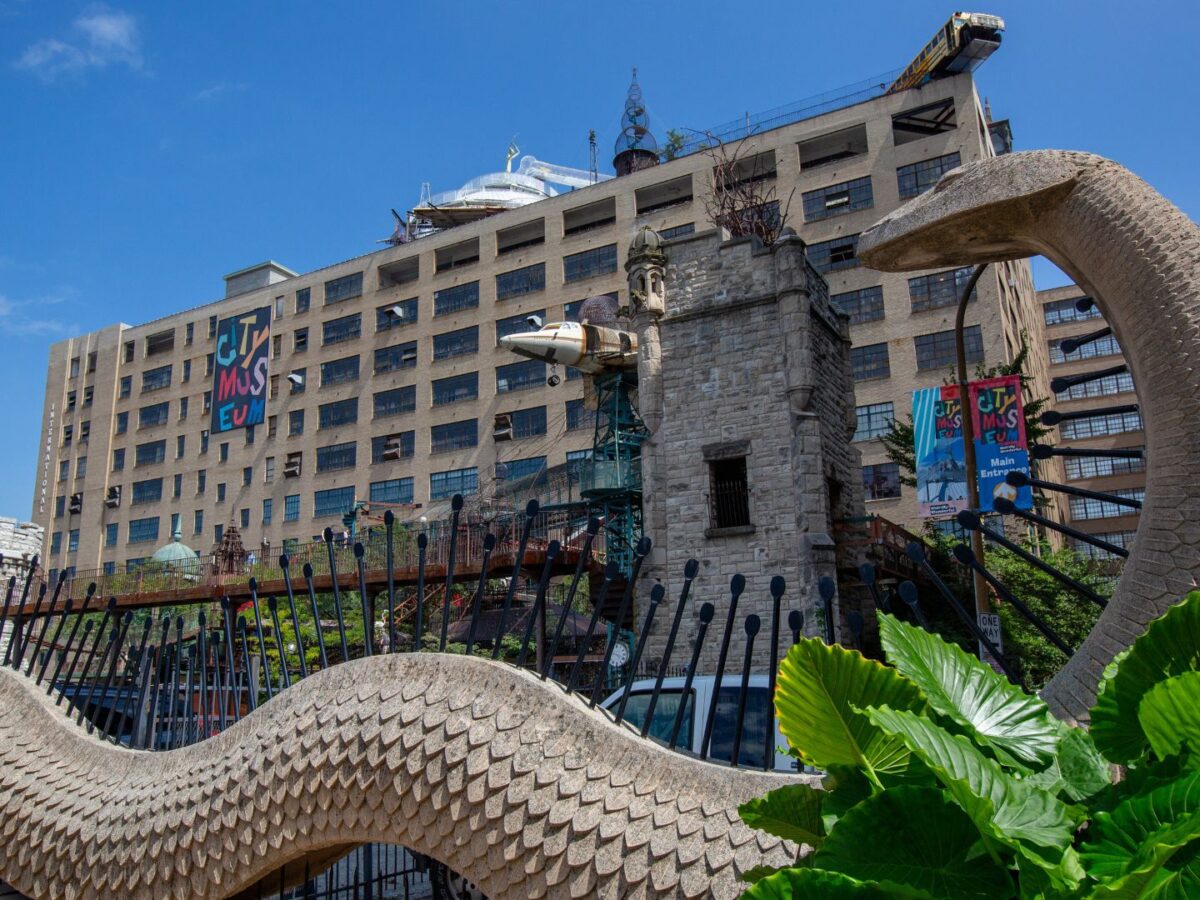
First and foremost, when the museum is closed, the building is remarkably peaceful. The City Museum was built with thick concrete floors, stone, and masonry throughout. Those materials absorb sound exceptionally well, and during off-hours the loft floor is quiet, calm, and serene.
During museum operating hours, the sound you're most likely to hear is the sound of people playing and enjoying themselves. For most residents, that's not a drawback—it's actually one of the unique benefits of living here. There's something special about hearing the energy and joy of the museum below while still enjoying the comfort of your own home.
Different lofts also experience different mechanical sounds depending on their location in the building. For example, two lofts are located adjacent to the motor room for the museum's four-story elevator. Residents there can hear the occasional muted click and gentle hum of the elevator machinery as it carries visitors up and down. It's noticeable, but not loud.
Other lofts hear the rhythmic kachunk, kachunk of the shoelace-making machines operated by the Shoelace Factory on the sixth floor. What might sound unusual at first often becomes a strangely mesmerizing part of the building's character—a steady, almost comforting rhythm in the background.
Several times each year—typically 10 to 15 occasions—the museum hosts special events, concerts, fundraisers, or celebrations. During those evenings, residents may hear live music, DJs, and the sounds of festivities filtering up through the building. Most residents genuinely enjoy those nights and appreciate the reminder that they live in one of the most unique buildings anywhere.
And on those rare occasions when a DJ's musical choices don't quite align with your own, most seasoned loft residents keep a small white-noise machine in the bedroom for emergencies.
Living at City Museum Lofts isn't perfectly silent—it's something much better. It's peaceful when it's supposed to be peaceful, lively when the museum is alive, and full of the character that makes this building unlike anywhere else.
Are pets allowed?
Yes, with conditions and Board approval. In Residential/Light Business Units, the following pets are permitted:
- Up to two dogs and two cats, or one dog and one cat, or two birds or other small caged animals — and fish in aquariums — may be kept as pets, subject to Board approval.
- No breeding of pets is allowed except fish.
- No wild animals, livestock, fowl, or poultry may be kept in any unit.
When a pet is outside the unit, it must be restrained on a leash at all times, and any waste must be removed by the owner immediately. The Board has authority to require cleanup and charge the responsible owner if not done promptly — including on public sidewalks surrounding the building.
The Board has the right to require permanent removal of any pet from the Condominium upon at least 10 days' prior written notice, if the pet causes a nuisance due to viciousness, odor, noise, rule violations, or other cause. (§ 5.2(b))
Fish in household aquariums are not considered "animals" for purposes of these restrictions.
What about noise and neighbor issues?
Noise is regulated under both general restrictions (applying to all units) and unit-specific rules: All Units: No loud noises — including music, party noise, or construction — that disturb other occupants are permitted between 1:30 a.m. and 7:00 a.m. Normal deliveries and loading/unloading may occur during those hours only if they do not cause excessive noise in Residential/Light Business Units. (§ 5.1(c))
Residential/Light Business Units: Unit Owners must keep controllable noise (TV, radio, stereo, talking, hammering, etc.) at a level that is not objectionable in another unit or in the Common Elements. Reasonable construction and renovation noise is allowed provided reasonable efforts are made to minimize it and limit the time of noise, as determined by the Board. (§ 5.2(c))
No noxious or offensive activity may be carried on in any Residential/Light Business Unit or Common Elements, nor may anything be done that would become an annoyance or nuisance to other Unit Owners or occupants. The Board has sole discretion to make this determination. Nuisance may include loud noises, foul smells, or unsightly conditions. (§ 5.2(c))
Enforcement: An aggrieved Unit Owner may bring an action against another Unit Owner for failure to comply with the Declaration, Bylaws, and Rules and Regulations. The Board also has the right to fine, levy costs, and seek legal remedies for violations. (§§ 5.1(m), 11.1–11.5)
